Great minds don’t necessarily think alike, Kahl says
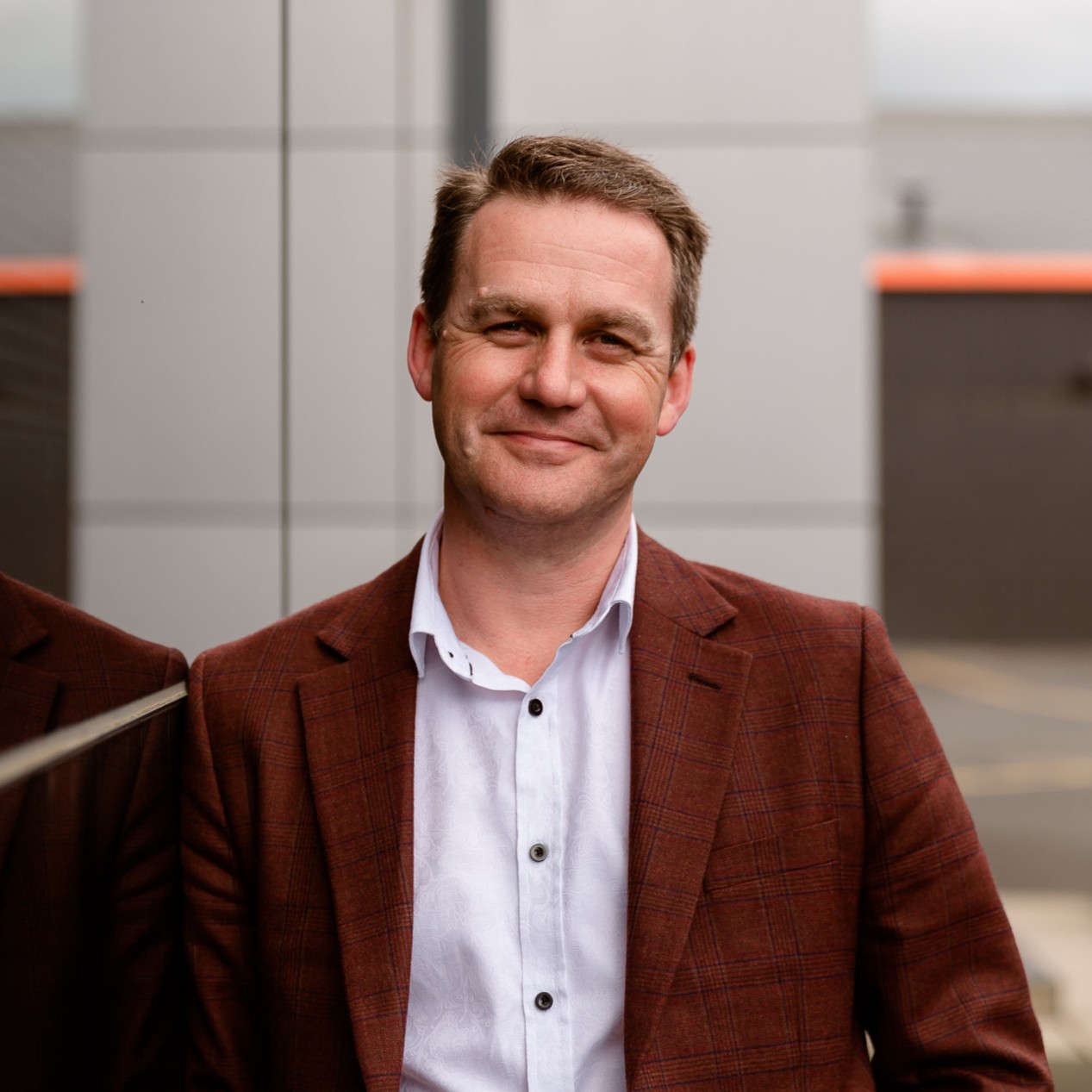
With an estimated 800 million to 1.2 billion neurodivergent people around the world, the importance of embracing neurodiversity is becoming increasingly clear.
Neurodiversity refers to the understanding that people naturally vary in how their brains work. The umbrella term includes neurological differences such as autism, dyslexia, and ADHD (attention-deficit hyperactivity disorder).
Neurodivergences are increasingly being recognised as sources of unique strengths and competitive advantage. When people think differently, they solve problems differently - and that diversity of thought is a powerful driver of innovation.
Gallagher Group Chief Executive Officer and Executive Director Kahl Betham says:
“My ADHD journey started when my eldest son, Jack, was held back in his first year of school for being ‘immature’. But we noticed he had extraordinary capabilities. By the time he was seven, he had created 27 comic book characters, each with a seven-book series.”
“The doctor who diagnosed Jack said that ADHD should just be called interest-based learning. This was the first time my wife and I also wondered if we might be neurodiverse too,” Kahl reflects.
“When I looked back at my own school reports, I was top of the class in the things I loved - engineering, computer science, and maths - but graded just enough to pass for everything else. I’m always early for things I love, and just in time for other things.
“I went to a neuropsychologist and learned I have some Asperger’s traits, and a load of ADHD.”
Reframing from disorder to superpower
ADHD, attention-deficit hyperactivity disorder, impacts the part of the brain that helps to plan, control impulses and execute tasks. But Kahl believes reframing neurodivergences as superpowers, rather than disorders, is much more accurate.
“I’m proud of my ADHD and my Autism. Science now tells us that people with ADHD and autism often have a stronger presence of the innovation and novelty-seeking gene. My neurodivergences provide me with capabilities that feel like superpowers, and deliver a level of innovative, unfair competitive advantage,” says Kahl.
“My ADHD is the hyperfocus, dot-connecting, innovation type - those are my superpowers. My challenges are managing burnout, overdrive, speaking over people, and remembering to listen.”
“When we reframe our thinking to focus on (and double down on) our strengths, while managing our challenges and not letting them define us, that’s a recipe for great success and fulfilment.”
Neurodiversity quietly shaped a career path
In retrospect, these traits have strongly influenced Kahl’s career journey.
“My path to CEO started in software engineering. I realised early on I didn’t like sitting down too much - I preferred working with people. I moved into a business analyst role, and then into product management, where I built and launched products, ran a division, and helped grow the market,” Kahl says.
“At each step, I developed a knack for seeing how things could be better - identifying critical factors and mapping a path forward. The more complex the challenge, the more I enjoyed it. If I spend enough time with a problem, patterns emerge and the end state becomes clear, almost like it’s already happened.
“That ability to connect the dots and navigate complexity has carried me through every stage of my career. It’s been a real advantage. These are superpowers those with neurodivergency need to harness.”
Normalising the conversation
“Telling people why I am the way I am - what happens when I’m at my best, not so good, or stressed - has been so helpful. Sharing it normalises that these are capabilities, not deficits or disorders,” says Kahl.
“As a family of six, with at least five neurodivergences in our mix of superpowers, we’ve come to see this as a source of extreme competitive advantage - not a disability.”
“In our family, we have a CEO, a doctor, an aspiring creative, an aspiring space scientist, an aspiring pilot… and we’re excited to see what our youngest chooses to hyperfocus on.”
The opportunity for us
“Diversity of thought is a key part of a successful organisation. I want neurodiversity to be seen, celebrated, understood, and normalised as a set of capabilities and different ways of thinking to be harnessed,” Kahl says.
“The tech sector is littered with, and powered by, neurodiverse people like me. Let’s be brave enough to hire someone who, for example, doesn’t interview well and might be a bit socially awkward, but just might change the world because they think differently.”